
Anyone who has driven through Baltimore for more than a few months knows the city’s streets have a personality all their own. Between the patchwork of repairs on roads like Pratt Street, the uneven brick and cobblestone sections still found in some of the older neighborhoods, and the general wear that comes with decades of heavy use, Baltimore’s infrastructure asks a lot of every vehicle that travels it. While most drivers notice the bumps and jolts in the moment, far fewer connect that daily experience to the gradual toll it takes on their suspension system.
Why Baltimore’s Roads Are Particularly Hard On Suspension
Much of Baltimore’s road infrastructure dates back decades, and while resurfacing projects happen regularly, the sheer scale of the city’s street network means many sections go years between meaningful repairs. This creates a patchwork of pavement conditions, sometimes changing from smooth to rough and back again within a few blocks, which forces a vehicle’s suspension to constantly adjust to varying surface conditions rather than settling into a consistent rhythm the way it might on a well maintained highway.
Older neighborhoods with historic brick or cobblestone streets present their own unique challenge. While charming, these surfaces are inherently less smooth than modern asphalt, and years of settling, freeze thaw cycling, and heavy vehicle traffic have left many of these streets with an unevenness that puts repeated, low level stress on suspension components every time a vehicle passes over them.
What Constant Uneven Pavement Does To Struts And Shocks
Struts and shocks are designed to absorb the impact of bumps and uneven surfaces, converting the jarring motion of a rough road into a smoother ride for the vehicle’s occupants. Every bump absorbed represents a small amount of wear on these components, and Baltimore’s combination of aging asphalt, frequent potholes, and historic uneven streets means local drivers accumulate this wear considerably faster than someone driving primarily on well maintained suburban roads or modern highways.
Over time, worn struts and shocks lose their ability to dampen these impacts effectively, which creates a cycle where the ride becomes progressively bouncier and less controlled, while the worn components themselves become increasingly less able to protect the rest of the suspension system from the very road conditions that wore them down in the first place. This compounding effect is part of why suspension issues in cities like Baltimore tend to escalate more quickly once they start.
How This Extends Beyond Struts And Shocks
Control arms, bushings, and other suspension components also bear the brunt of constant uneven pavement exposure. Bushings, which are made of rubber or polyurethane and designed to absorb vibration while allowing controlled movement, tend to wear out faster under repeated jarring impacts than they would under smoother driving conditions. A bushing that has degraded due to years of Baltimore’s rough streets can create clunking noises, imprecise steering feel, or uneven tire wear, even if the struts and shocks themselves are still in reasonable condition.
Alignment can also be knocked out of specification by a hard pothole impact, which is a separate but related issue from general suspension wear. A vehicle that pulls to one side or shows uneven tire wear patterns after hitting a significant pothole is often dealing with an alignment issue on top of whatever cumulative suspension wear has already been building from months or years of driving on Baltimore’s rougher streets.
Signs It Is Time For A Suspension Check
A few signs suggest your suspension has taken enough of a beating from Baltimore’s roads to warrant an inspection. A ride that feels noticeably bouncier than it used to, with the car continuing to bounce a few times after hitting a bump rather than settling quickly, often points to worn struts or shocks. Clunking or knocking noises when driving over uneven surfaces, a vehicle that dips noticeably during braking, or visible fluid leaking from a strut are all worth having checked as well.
Uneven tire wear, particularly cupping or scalloping patterns on the tread, can also indicate that worn suspension components are allowing the tires to bounce against the road surface rather than maintaining consistent contact, which accelerates tire wear on top of the suspension issue itself. If you have dealt with a car that struggled to start after sitting through rough handling or a particularly jarring pothole impact, our guide on the top 10 reasons your car won’t start and how to get back on the road covers a range of causes worth ruling out alongside a suspension inspection.
Why Catching Suspension Wear Early Matters
Beyond ride comfort, a suspension system in good working order plays a direct role in vehicle safety, since struts and shocks help maintain proper tire contact with the road during braking, cornering, and sudden maneuvers. Worn suspension components can meaningfully increase stopping distances and reduce handling stability, which matters considerably more on a city’s unpredictable streets than it might on a smooth, controlled highway environment.
This is particularly relevant for anyone regularly navigating Baltimore’s older residential streets, where narrow lanes, parked cars on both sides, and sudden pedestrian crossings already demand quick, precise handling. A vehicle with degraded suspension response is simply less capable of reacting well to these situations, turning what should be a routine maneuver into a more uncertain one at exactly the moments when precise control matters most.
Catching wear early, before it progresses into a component failure or begins accelerating tire wear and alignment problems, generally means a simpler and less expensive repair than waiting until the issue has compounded across multiple systems.
Why A Mobile Mechanic Fits Baltimore’s Driving Reality
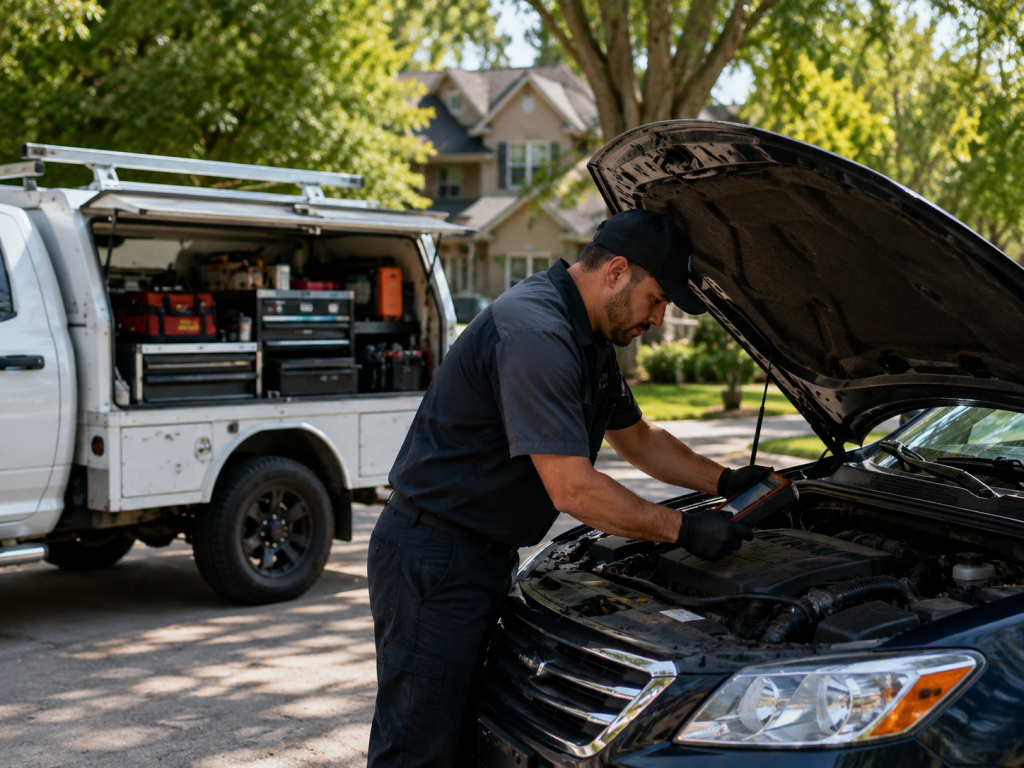
Given how much of Baltimore’s suspension wear comes from the specific streets residents navigate every day, having a technician familiar with these local conditions come directly to your home or workplace offers a real advantage. A mobile mechanic can inspect struts, shocks, bushings, and alignment right where your vehicle is parked, without adding another trip across the same rough streets that caused the wear in the first place.
We covered the broader benefits of this approach in our article on why mobile mechanics are better than traditional auto shops in Baltimore, which explains how convenience and local familiarity come together, particularly useful for the kind of ongoing suspension maintenance that city driving here tends to require.
Stay Ahead Of What Baltimore’s Streets Are Doing To Your Car
Baltimore’s aging infrastructure is not something any individual driver can fix, but staying ahead of the wear it causes on your suspension is entirely within your control. Paying attention to ride quality, unusual noises, and tire wear patterns, and having your suspension checked periodically rather than only after something fails, is one of the simplest ways to keep your vehicle safe and comfortable despite everything the city’s streets throw at it.
If it has been a while since your suspension was inspected, visit our homepage to learn more about our services, or reach out through our contact us page to schedule a visit at your home or office anywhere in the Baltimore area.
A little proactive attention now can help your car absorb everything Baltimore’s roads have to offer without absorbing more wear than necessary along the way.