
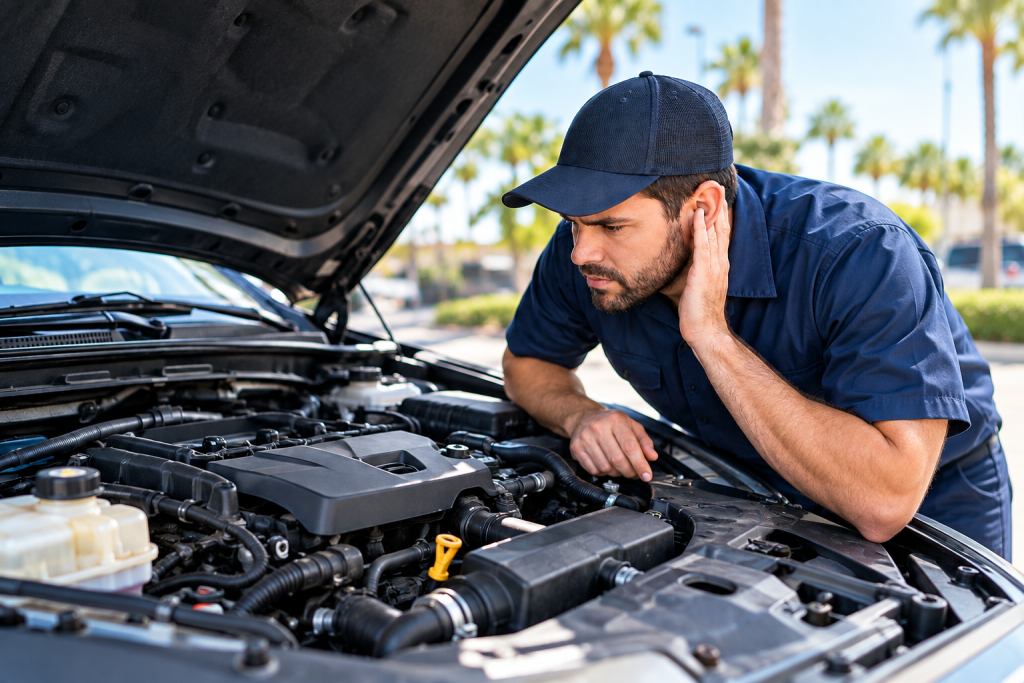
Every Baltimore driver knows the jolt. You are cruising along, a pothole appears out of nowhere, and your car slams through it with a thud you feel in your teeth. Most of the time you keep driving and hope for the best. But a hard pothole hit can bend, loosen, or crack parts that keep your car steering straight and riding smoothly, and the damage is not always obvious right away. This guide explains the signs of pothole damage to watch for, how to tell whether your suspension or alignment took a hit, and what to do next.
Why Potholes Damage Cars
A pothole forces a wheel to drop suddenly into a gap and then slam against the far edge. The force travels through the tire, the wheel, and then up into the suspension and steering system. Even at moderate speeds, that impact can be enough to bend a wheel, knock the alignment out of position, damage a tire sidewall, or break a suspension part. Faster speeds, larger holes, and heavier vehicles make the damage worse.
Baltimore’s freeze and thaw cycles create new potholes every winter and spring, which means the risk is not limited to one season. Our article on how Baltimore’s aging roads affect your car’s suspension explains why the city’s streets are so hard on vehicles and what wears out first.
What Should You Do Right After Hitting a Pothole?
If it is safe, pay attention to how the car feels in the minutes after the impact. When you can, pull over in a safe spot and take a quick look. Check the following:
- Do the tires look low, bulging, or damaged on the sidewall?
- Is any wheel visibly bent or dented?
- Do you see fluid leaking under the car?
- Do you hear any new noises as you drive off?
- Does the steering wheel sit straight, or is it crooked?
- Does the car pull to one side?
If a warning light comes on, a tire loses pressure quickly, or the car feels unsafe to drive, stop and call for help instead of driving further.
Sign One: The Car Pulls to One Side
If your car drifts left or right when you drive straight on a flat road, the alignment may be off. A pothole can knock the wheels out of their precise angles, and even a small change can affect how the car tracks. Pulling is one of the most common signs of alignment trouble, and it can also point to uneven tire pressure or a damaged suspension part.
Sign Two: A Crooked Steering Wheel
When you drive straight, the steering wheel should sit level. If it is tilted to one side after a pothole hit, the alignment or a steering component may have shifted. A crooked wheel does not always feel dangerous, but it is a clear signal that something moved.
Sign Three: Vibration or Shaking
A new vibration in the steering wheel, seat, or floor can indicate a bent wheel, a damaged tire, or an out of balance wheel. Vibrations that grow at highway speeds are a common clue. Bent rims and tire damage can cause the problem, and ignoring it can lead to further wear or even a blowout.
Sign Four: Bulges, Bubbles, or Cuts on the Tire
Look closely at each tire, especially the sidewalls. A bulge or bubble means the internal structure of the tire has been damaged, and it can fail suddenly. Cuts, cracks, or deep scrapes are also reasons to have the tire inspected. A tire with sidewall damage should not be repaired casually, and in many cases it needs to be replaced.
Sign Five: Rapid or Uneven Tire Wear
Misalignment wears tires unevenly, usually on the inner or outer edge. You may not notice it for weeks, but the damage adds up quickly. Check your tread regularly, and look for one side that is worn more than the other. If you see this pattern, have the alignment and suspension checked before you pay for a new set of tires.
Sign Six: A Bouncy, Rough, or Noisy Ride
A damaged shock, strut, or spring can make the ride feel harsh or floaty. You may notice extra bounce after bumps, a clunk or rattle over uneven pavement, or a car that dips more than usual when you brake. Worn or broken suspension parts reduce control and can lengthen stopping distances. Do not assume noises will go away on their own.
Sign Seven: Fluid Leaks or Visible Damage Underneath
A hard hit can crack a part under the car or damage a component that holds fluid. Look for wet spots on the ground where you park. Leaks from shocks, struts, the steering system, or the oil pan can all show up after a severe impact. A bent or dragging part under the car is also a sign to stop driving and get help.
Sign Eight: Dashboard Warning Lights
A tire pressure light can mean a puncture or slow leak from the pothole. A check engine light, an ABS light, or a stability control light can appear if a sensor or wire was damaged by the impact. Do not ignore a warning light just because the car seems to drive normally.
Why Wheel Alignment Matters
Wheel alignment describes the angles at which your tires meet the road. When those angles are right, the car tracks straight, the tires wear evenly, and the steering feels natural. When they are off, you get pulling, uneven wear, and sometimes worse fuel economy. A pothole can disturb the alignment in an instant, which is why a wheel alignment check is a smart step after a hard hit. Alignment work requires specialized equipment, so a technician will tell you whether it can be done on site or whether it requires a shop. Ask about that when you book.
Is It Safe to Keep Driving?
It depends on what is damaged. A small alignment shift may be safe to drive on for a short time, but it will wear your tires and may get worse. Tire bulges, severe vibration, a loose or clunking steering feel, fluid leaks, or warning lights are signs to stop and have the car checked right away. When in doubt, it is safer to call a professional than to keep driving on damaged parts. If your car will not start after a hard impact, our guide to the top 10 reasons your car won’t start and how to get back on the road can help you narrow down the cause.
How Can a Mobile Mechanic Help?
A mobile mechanic can inspect your car where it is parked, whether that is your home, workplace, or the side of the road. The technician can check the tires, look over the suspension and steering parts, test for leaks, and explain what needs attention. Many suspension repairs, such as replacing a shock, strut, or control arm, can be done on site. Some work, like a full alignment, may need a shop with specialized equipment, and a trustworthy technician will be upfront about it. When you book, describe the impact and any symptoms so the technician can bring the right tools and parts.
How to Avoid Pothole Damage
You cannot avoid every pothole, but a few habits help. Leave extra following distance so you can see holes ahead. Slow down before you reach a rough patch instead of braking over it. Keep tires properly inflated, since low pressure makes damage more likely. Avoid swerving suddenly, which can put you in danger from other traffic. And schedule regular inspections so small suspension problems are found early.
Do Not Wait to Check Your Car
Pothole damage rarely gets better by itself. A quick inspection after a hard hit can save your tires, protect your suspension, and keep your car safe to drive. If you notice any of the signs above, get the car checked sooner rather than later.
To learn more about our services, visit our homepage. If your car took a hard hit, reach out through our contact us page and we will come to you anywhere in the Baltimore area.